3 hr
Evening Paella & Tapas Cooking Class in Triana
Master authentic Andalusian recipes in a hands-on group class with sangría, dinner, and drinks included
Reserve
Hand-picked by our editors — only the best 5 cooking experiences from 18 reviewed.
Verified partners for every tour, free cancellation where available, and instant confirmation on every booking.
3 hr
Master authentic Andalusian recipes in a hands-on group class with sangría, dinner, and drinks included
Reserve
3 hr 30 min
Shop for fresh ingredients at a historic Seville market, then cook and feast on authentic paella and tapas.
Reserve
2 hr 30 min
Watch a chef prepare Spain's iconic rice dish, sip fresh sangria, and feast on authentic Andalusian flavors
ReservePrices from verified partners. Availability updates in real time at checkout. Free cancellation policies apply where shown.
The landmarks, rooms, and views travelers on this tour remember — all visible on a single visit.
A historic market built over the ruins of a medieval castle. It serves as the primary location for your seville cooking class paella.
These ancient ruins are located directly beneath the market floor. Exploring them adds context to your seville cooking class paella.
The dedicated space where every seville cooking class paella takes place. It features professional-grade equipment for authentic learning.
Also known as Triana Bridge, this structure offers a view of the river. It is the best route to reach your seville cooking class paella.
Cooking classes offer hands-on culinary engagement, while a flamenco dinner show provides a passive, sensory-rich performance. Selecting a seville cooking class paella allows you to master local gastronomy, whereas the rival performance offers an immersive spectacle of dance and guitar.
| Feature | Top pick Paella Class | Flamenco Show |
|---|---|---|
Experience Type |
Active culinary workshop | Passive theatrical performance |
Level of Interaction |
High - direct participation | Low - observational entertainment |
Primary Focus |
Technique and ingredients | Dance, song, and music |
Duration |
2.5 - 4 hours | 1.5 - 2 hours |
Skill Development |
Cooking and preparation | None |
Atmosphere |
Social and educational | Intimate and rhythmic |
| See tickets → |
Verdict: Choose the seville cooking class paella tours if you prefer creating your own meal, or select the dinner show if you seek to appreciate professional Andalusian performing arts through seville cooking class paella tickets and related cultural packages.
Choose your ticket, select your date, and reserve in under two minutes. Secure checkout handled by our verified partner.
Instant confirmation by email, with a mobile voucher you can save offline. No printing, no queuing at a collection desk.
Arrive at the entrance, show your voucher on your phone, and walk in. Most tickets include priority or skip-the-line access.
Practical details for your visit straight from our verified partners — hours, access, rules, and how to get there.
Calle San Jorge, 6
Look for the main market entrance signage.
Use local bus lines stopping at nearby Plaza de Cuba.
Cross the Puente de Isabel II from the city center.
Casual and comfortable clothing is recommended for your seville cooking class paella experience. Closed-toe shoes are advised as you will be standing in a professional kitchen environment.
Secure lockers are not provided, so guests should keep personal items to a minimum. The market is a public space, but your seville cooking class paella takes place in a designated private area.
Photography is encouraged during the preparation and cooking segments of your seville cooking class paella. Please respect the privacy of instructors and other participants when filming.
The venue is located on the ground floor of the Mercado de Triana. Please contact the operator in advance if you require assistance for a seville cooking class paella.
Phones are permitted for taking photos of your seville cooking class paella. We suggest silencing devices to focus on the instructor.
Families are welcome, though children must be supervised at all times. Some parts of a seville cooking class paella involve heat and sharp tools.
All ingredients for your seville cooking class paella are sourced fresh from local vendors. Dietary restrictions should be communicated during the booking process.
Pets are not permitted inside the kitchen facility. Service animals may be accommodated with prior notice.
Arrive 15 minutes before your scheduled seville cooking class paella begins. Market tours often precede the cooking instruction.
Best time to go, insider tips, nearby landmarks, and the cancellation fine print — flip through to skim what matters to you.
How crowds, weather, and events shift across the year.
Mild temperatures and vibrant market produce characterize this season.
Very hot afternoons make indoor classes a preferred activity.
Ideal time to enjoy a seville cooking class paella as local ingredients peak.
Cooler weather makes the warm kitchen environment pleasant.
Small details that turn a good visit into a great one.
Visit between 09:00 and 10:00 to see the market at its most active. This ensures the best start for any seville cooking class paella.
Wear light clothing, as kitchen temperatures rise during cooking. This is a practical tip for any seville cooking class paella.
Book your seville cooking class paella tickets in advance to ensure availability. Weekends often sell out quickly.
Engage with the market vendors during your walk. They are the backbone of the seville cooking class paella experience.
Notify the operator of any allergies. This is crucial for a smooth seville cooking class paella.
Non-bookable sights within a short walk — free to visit, easy to pair.
Iconic iron bridge connecting the city center to Triana.
Historical site located directly beneath the market.
Famous riverside street known for traditional architecture.
Oldest church in the neighborhood featuring Gothic style.
Flexible, no hidden fees.
Individual booking fees for any seville cooking class paella are non-refundable within 48 hours of the event. Please refer to the official site for full terms regarding rescheduling.
Hand-picked options within walking distance — pick a district for vibe, or a specific hotel for convenience.
Comfortable stay near the market location.
Charming local guest house in the heart of Triana.
Wide selection of luxury and budget options across the river.
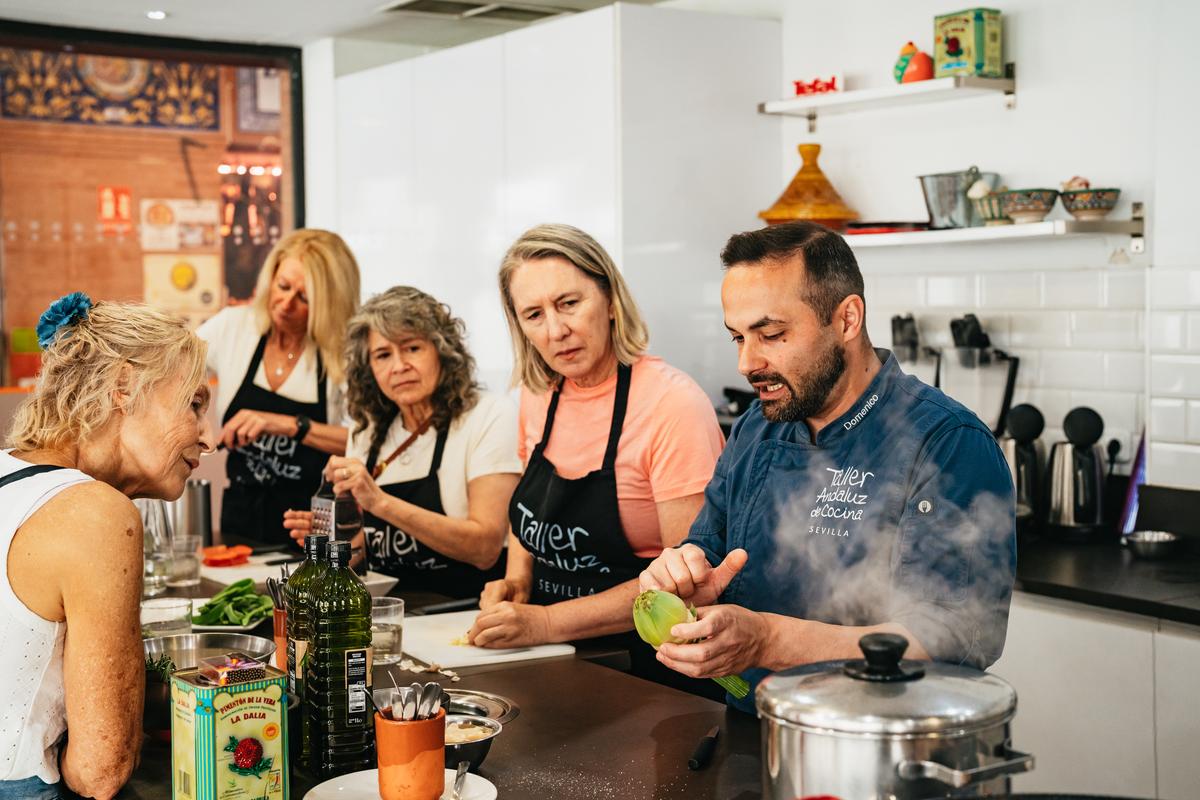
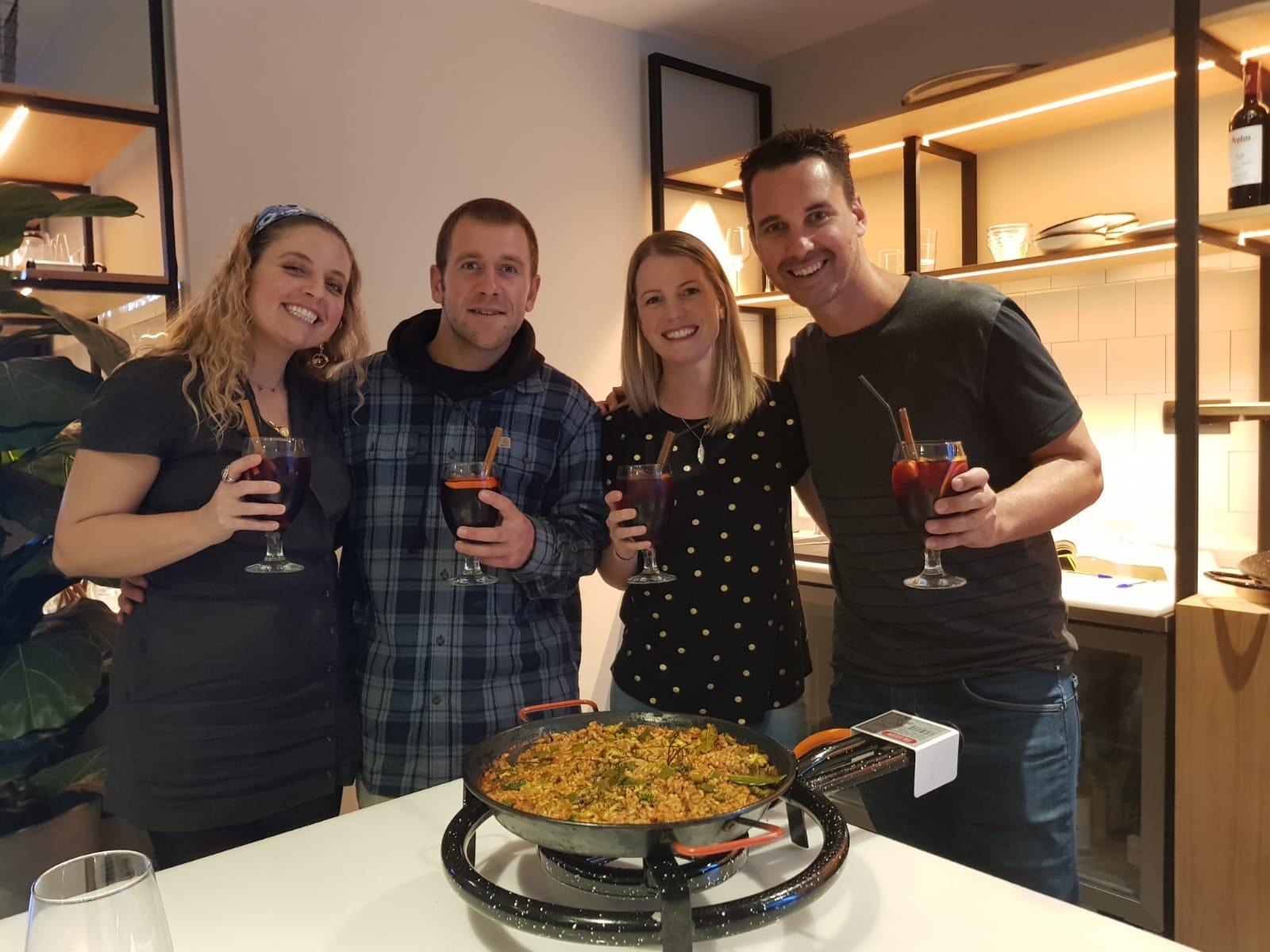
The Mercado de Triana has anchored Seville's west bank since 1823, when Isabel II ordered the city's markets consolidated into purpose-built iron pavilions. The current structure—a wrought-iron and glass hall rebuilt in 2005 over the foundations of the 13th-century Castillo de San Jorge—holds seventy-six vendor stalls that open each morning at nine. Fishmongers display gilt-head bream and gambas blancas from the Huelva coast; vegetable sellers stack artichokes from the Guadalquivir delta; butchers hang Ibérico secreto and pluma cuts from Extremadura. The market's second floor hosts the Taller Andaluz de Cocina, where Seville cooking class paella sessions run daily in a windowed studio overlooking the river. Professional chefs trained in Andalusian techniques guide participants through the layering of bomba rice, saffron threads sourced from La Mancha, and proteins—rabbit, chicken, or seafood depending on the day's catch. Paella evolved in Valencia's Albufera wetlands during the 18th century as a field meal for farm laborers, cooked over open flames in wide pans designed to maximize socarrat—the caramelized rice crust that forms on the pan's base. By the early 20th century, the dish had migrated across Spain's Mediterranean arc, with each region adapting the formula to local ingredients. Seville's version incorporates Andalusian staples: sherry vinegar, pimentón de la Vera, and olive oil from the Baena denomination. The city's culinary schools and market-based workshops now form a €14 million segment of Andalusia's gastronomic tourism economy, drawing 280,000 visitors annually to hands-on sessions that demystify Spanish cooking class traditions. The Triana district—historically home to Seville's ceramic workshops and flamenco guilds—remains the city's most food-focused neighborhood. Its market serves as both a working provisioner for local residents and a culinary classroom for travelers seeking ingredient-level instruction. Cooking instructors source produce within the market's aisles minutes before each session begins, explaining seasonal availability and regional provenance. Participants learn knife techniques for vegetable prep, the geometry of arranging proteins in concentric circles, and the precise moment to halt stirring so the socarrat develops properly. Sessions conclude with communal tastings paired with Spanish wines, often Verdejo or Albariño, selected to complement the dish's saffron and paprika notes.
"The market's iron pavilion rebuilt in 2005 holds seventy-six vendor stalls that open each morning at nine."
A step-by-step walkthrough of the visit — what you'll see, how long each stage takes, and the details that matter.
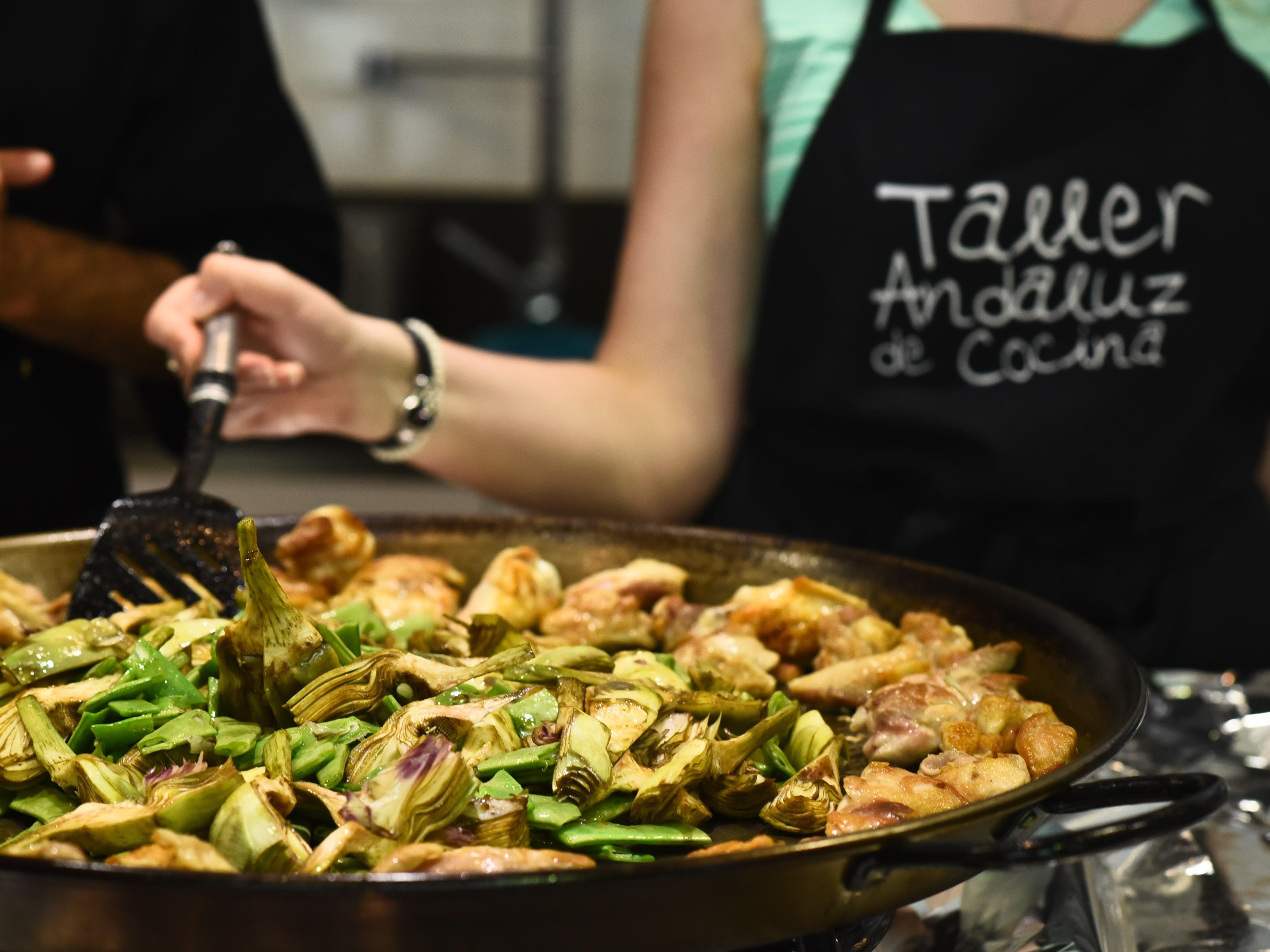
You arrive at Mercado de Triana by mid-morning, when vendors are restocking displays and the hall smells of fresh bread and cured ham. Your instructor meets you at the market's central aisle, carrying a canvas shopping bag. Together you walk the perimeter, pausing at a seafood stall where the chef selects four langostinos and a half-kilo of clams, then moving to the produce section for vine-ripened tomatoes and flat-leaf parsley. The vegetable vendor wraps the items in brown paper and ties the bundle with twine. Upstairs in the teaching kitchen, you rinse the rice under cold water while the instructor heats olive oil in a 40-centimeter paella pan. You add diced chicken thighs, searing them until golden, then push the meat to the pan's edges. Saffron threads steep in a small bowl of warm broth beside your workstation. The instructor demonstrates the wrist motion for spreading rice evenly across the pan's surface, then hands you the wooden spoon. You pour the saffron broth in steady circles, watching the liquid reduce over fifteen minutes. The clams open gradually; you arrange them facing outward. When the rice begins to crackle, the instructor lifts the pan from the heat and covers it with a linen towel. You wait five minutes, then carry your portion to a communal table set with chilled glasses of white wine.
The Mercado de Triana is open daily from 09:00–21:00. You should schedule your seville cooking class paella accordingly.
Market entry is 0 EUR, though cooking classes require individual booking fees.
You can book your seville cooking class paella tickets directly via the official site.
Yes, children are welcome at the seville cooking class paella, provided they are supervised.
Bring your booking confirmation and comfortable shoes for your seville cooking class paella.
Yes, the kitchen area is accessible; contact us if you need specific help with your seville cooking class paella.
No, external food is not permitted during a seville cooking class paella.
Cancellations for a seville cooking class paella are subject to the operator policy, usually requiring 48 hours notice.
Yes, visit the Castillo de San Jorge or Puente de Isabel II after your seville cooking class paella.